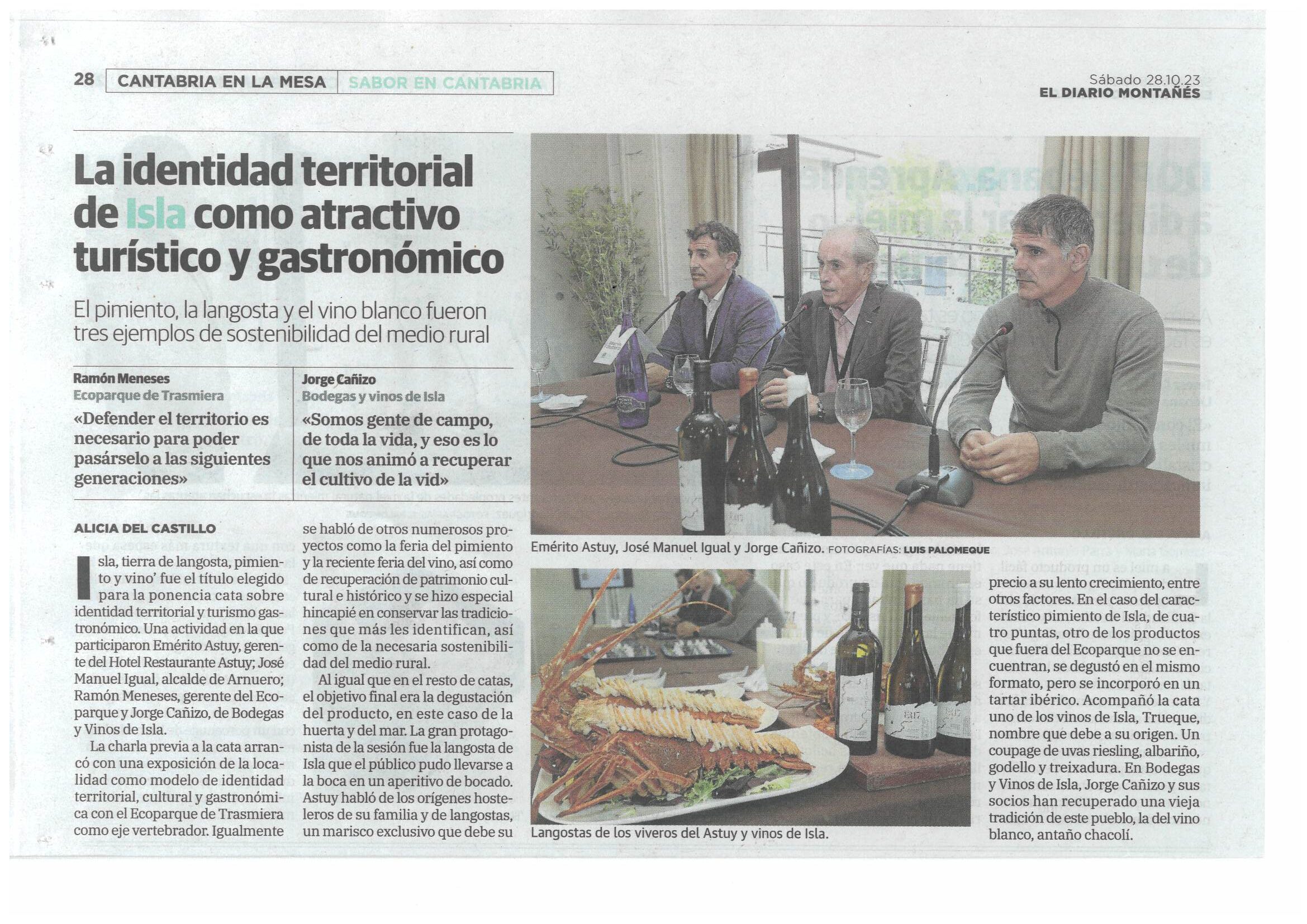
The Arnuero Town Hall presented in “Flavour in Cantabria” its alternative of a responsible and sustainable tourism model, one of whose main pillars is made up of food tourism based on local and authentic produce.
Thus, within the framework of this event, the talk with tasting was presented: “Territorial identity and food tourism: Island, land of lobster, pepper and wine”. After a brief introductory presentation in which the journey of the Trasmiera Ecopark was presented succinctly, focusing on the recovery and conservation of cultural and natural heritage, the landscape and traditions as key elements to safeguard the territory with its identity and authenticity. To this end, many of the initiatives in recent years have been geared towards promoting ancestral traditions such as the fishing of lobster, or the kitchen garden and pepper of Isla, to which, more recently, the long-recovered wine-growing tradition has been added.
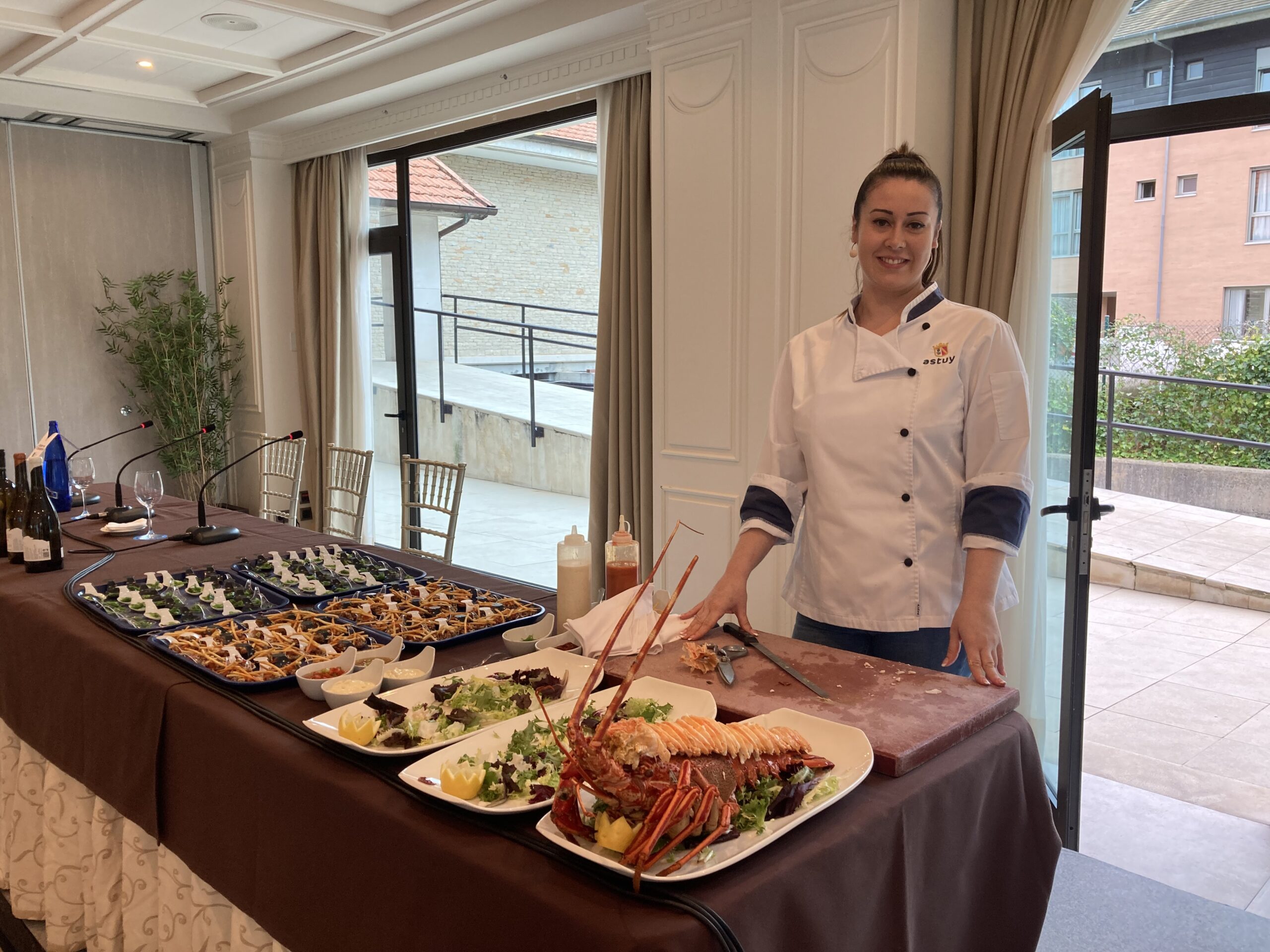
Aligned with these three charismatic products of the municipality, Emerito Astuy also took part, explaining the characteristics and history of Isla lobster, and, together with the kitchen team from his hotel, offered a tasting of pepper pinchos and lobster pinchos. Jorge Cañizo also participated representing Bodegas and Viñedos de Isla, commenting on his experience in recovering the cultivation of vines and wine production, formerly chacolí, and offering, during the tasting, one of his most recognised wines, the “Trueque”, whose name links with the wine-making tradition lost on Isla and now recovered.
Closely related to this line of action, two issues were raised that in the future will be fundamental:
The value of family farming and livestock rearing for the sustainability of the territory. Indeed, this model, which has suffered a major crisis in recent decades, is presented as a fundamental tool for the future with multiple functions:
- TERRITORIAL FUNCTION. Family farming helps maintain in rural areas a small population.
- PUBLIC FUNCTION. Farmers and livestock keepers are managers of the territory and of the natural resources that make up the landscape of Spanish geography.
- CLIMATE ACTION. Family farming, both with regard to adapting to and mitigating climate change, plays a key role.
- PROTECTION OF BIODIVERSITY. Enables great efficiency in the use and management of natural resources, conservation of biodiversity, and rational management of land and water.
- FIGHT AGAINST DEPOPULATION. Without family farming and livestock rearing, there is no life in the rural environment.
On the other hand, emphasis was placed on the value of food tourism in preserving local territories and promoting sustainable practices. Efforts should focus on policies that strengthen agriculture, food and tourism, always through the lens of protecting food traditions, the value of geographical indications, and promoting the sustainability and identity of rural areas—so that producers can thrive in an increasingly global and interconnected world. To this end, some of the conclusions of experts at the 8th World Gastronomy Tourism Forum were highlighted:
- “Food tourism can play a central role in promoting responsible farming practices, protecting biodiversity and reducing environmental footprint. It can also create new opportunities for communities to prosper and protect their heritage and traditions”.
- “We are in an ideal period to promote the transformative dynamic and link food tourism with rural development. The territory, innovation and creativity are key to moving successfully towards a new model of responsible tourism focused on caring about people and the environment. It is essential to make an effort to preserve the authenticity and diversity of a territory’s food offering.”
- “Food tourism across the world has become an effective tool for attracting tourists. We should make the most of our traditional kitchens and the nutritional value of artisan local products in order to ensure healthy lives and socio-economic development in our countries. This is consistent with our philosophy based on heritage to promote tourism.”